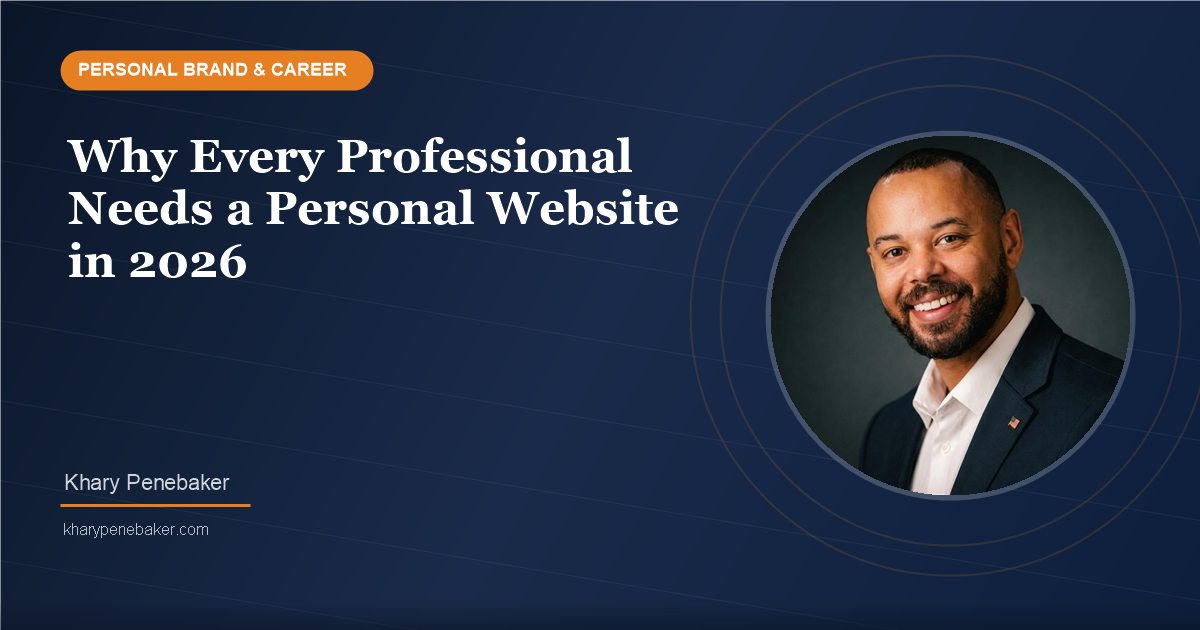
Why Every Professional Needs a Personal Website in 2026
I spent years building my career without a personal website. I had a LinkedIn profile, a decent resume, and a network that knew my name. But when I finally built kharypenebaker.com, I realized what I had been missing. A personal website is not just a digital business card. It is your home base on the internet. And in 2026, every professional needs one.
Your Personal Website Is the One Thing You Control
Social media platforms change their algorithms every month. LinkedIn decides what shows up in your feed. X can suspend your account overnight. Instagram buries your posts behind paid promotions. You do not own any of that. A personal website is the one piece of digital real estate that belongs entirely to you. Nobody can change your reach, hide your content, or shut you down.
After nearly 30 years in the construction and home improvement industry, I have seen trends come and go. But the professionals who stand out are the ones who control their own narrative. Your website lets you do exactly that.
Why a Personal Website Professional Brand Matters More Than Ever
Here is the reality of 2026. When someone hears your name, the first thing they do is Google you. What comes up? If you do not have a personal website, you are letting search results define you. Maybe it is an old article. Maybe it is someone else with the same name. Maybe it is nothing at all. That is a problem.
When I built my site, I wanted people to see exactly who I am. A leader in the home improvement industry. A gun violence prevention advocate. A father. A builder. My Experience page tells the story of growing Penebaker Enterprises from a $1.5M startup to $12M, then scaling Roofed Right America to over $35M across four Upper Midwest markets with 180 employees. No LinkedIn summary can capture that the way a dedicated page can.
Five Things Your Personal Website Should Include
You do not need to overthink this. Start simple and build from there. Here are the five pages every professional website needs.
1. About Page. Tell people who you are. Not your job title. Your story. What drives you. What you have accomplished. People connect with people, not resumes.
2. Experience or Portfolio Page. Show your work. Whether you are in construction, tech, consulting, or creative work, people want to see what you have done. Include real numbers and specific results.
3. Blog. This is where you build authority. Writing consistently about your industry, your perspective, and your expertise makes you the go-to person in your field. That is exactly why I launched this blog.
4. Contact Page. Make it easy for people to reach you. A simple contact form is all you need. Do not make someone hunt for your email address.
5. Media or Press Page. If you have been featured in articles, podcasts, or news segments, put them on your site. It builds credibility instantly. My Media page showcases my advocacy work and industry leadership in one place.
You Do Not Need to Be a Tech Expert
I am not a web developer. I built my site using WordPress with a clean theme. It took me less time than most people spend debating which platform to use. The tools available in 2026 make it easier than ever. WordPress, Squarespace, and Wix all let you build a professional site without writing a single line of code.
The biggest mistake people make is waiting for it to be perfect. Launch it at 80% and improve as you go. A good website that exists beats a perfect website that lives only in your head.
Your Website Works While You Sleep
Think about this. While you are sleeping, your website is out there representing you. Someone in another time zone is Googling your industry. A recruiter is researching candidates. A potential business partner is looking for someone with your exact skill set. Your website is your 24/7 ambassador.
I have had people reach out to me about speaking opportunities, business partnerships, and advocacy collaborations because they found my website. None of those conversations would have happened if all I had was a LinkedIn profile.
The Takeaway: Build It Now
Stop waiting. Buy a domain with your name. Pick a simple theme. Put up your About page, your experience, and a way for people to contact you. You can add a blog, a media page, and a resources page later. The important thing is to start.
In 2026, your personal website professional brand is not optional. It is how the world finds you, learns about you, and decides whether to work with you. Own your story. Build your site. Let the world see who you are.