
The State of Home Improvement in 2026: Trends to Watch
TL;DR
The US home improvement market is projected to reach $615 billion in 2026 (HIRI). Remodeling spending should hit a record $524 billion (Harvard JCHS). The trends driving that: outdoor living spaces, energy efficiency after federal tax credits expired, aging-in-place modifications for 58 million Americans over 65, and a labor shortage costing the industry $10.8 billion a year.
I walked my first job site in 1996. Back then the business was simple. Show up, do the work, shake hands, get paid.
Nearly 30 years later I’m running four markets in the Upper Midwest for Great Day Improvements and what I’m watching happen in this industry right now is worth talking about. Not because the trends are surprising. Because a lot of them are being misread.
The home improvement industry crossed $574 billion in 2024 according to the Home Improvement Research Institute. Harvard’s Joint Center for Housing Studies projects remodeling spending will hit a record $524 billion in early 2026. The NAHB Remodeling Market Index posted 64 in Q4 2025, marking 24 straight quarters above breakeven.
But the numbers don’t tell the full story.
Outdoor living isn’t a trend anymore. It’s the category.
Outdoor living spaces drove $1.3 billion in deck and patio construction alone in 2026 according to IBISWorld, and that number doesn’t capture sunrooms, screened porches, patio covers, or four-season rooms. Homeowners now allocate roughly 25% of their remodeling budgets to outdoor areas. Demand has risen 50% since 2020.

The pandemic didn’t create this shift, but it accelerated it. Homeowners figured out that a screened porch or enclosed sunroom adds functional square footage at a fraction of what a traditional addition costs. No foundation work. Shorter install timelines. And these are spaces people actually use.
I see it across all four of my markets: Chicago, Milwaukee, Madison, Minneapolis. Even with construction costs still elevated, demand for outdoor living stays strong. When you can give a family a three-season room that extends their usable space by 200 square feet for under $30,000, that kind of value is easy to see.
Most Popular Outdoor Living Upgrades (2026)
- Screened porch: $8,000 – $25,000. Three-season use, keeps bugs out, adds usable square footage without a full addition.
- Three-season room: $15,000 – $30,000. Insulated walls with large windows. Usable spring through fall in northern climates.
- Four-season sunroom: $25,000 – $60,000. Fully insulated, HVAC-connected. Year-round living space with the highest ROI at resale.
- Patio cover or pergola: $5,000 – $20,000. Shade and rain protection. Louvered options from companies like StruXure are growing fast.
- Outdoor kitchen: $10,000 – $50,000+. Built-in grills, countertops, and refrigeration. The high end of the market is expanding quickly.
Price ranges based on national averages from Remodeling Magazine and HomeAdvisor data.
Census data backs this up. 63.7% of new single-family homes included patios in 2023, the eighth consecutive year of record growth. Decks dropped to just 17.5%. The shift from elevated wood decks to covered, enclosed outdoor spaces is real, and it’s not slowing down.
Energy efficiency is driving more home improvement decisions than aesthetics
Heat pumps outsold gas furnaces for the full year in 2025, with manufacturers shipping 3.6 million heat pump units versus 3.2 million gas furnaces according to AHRI data reported by Canary Media. Heat pumps now represent 47% of residential cooling equipment sales, up from 33% a decade ago. Homeowners are thinking about energy performance in ways they weren’t five years ago.
I come from commercial roofing. At Penebaker Enterprises and Roofed Right America, energy performance was always part of the conversation. R-values, thermal bridging, ANSI/SPRI compliance. That language has migrated into residential. Homeowners now ask about utility bill impacts, insulation values, low-E glass specs, and how their windows interact with their HVAC load.
These aren’t questions I heard at this frequency five years ago.
What happened to the federal tax credits?
Most contractors haven’t caught up to this yet. The IRA’s energy efficiency tax credits, Section 25C and Section 25D, expired December 31, 2025. The $600 annual window credit and $2,000 heat pump credit no longer apply to 2026 installations. State-level rebate programs funded under the IRA (HOMES and HEAR) are still active in some states, but the federal picture changed fast.
Demand won’t disappear. But the sales conversation shifts from “you’ll get a tax credit” to “your energy bills drop $1,200 a year.” Contractors who can’t speak fluently about energy performance will lose bids to those who can.
Aging-in-place is the quiet growth engine
The aging-in-place renovation market hit $5.27 billion in 2024 and is projected to reach $9.21 billion by 2032 according to Verified Market Research, growing at a 6.92% CAGR. Seventy-five percent of Americans over 50 want to stay in their current home as long as possible per AARP’s 2024 survey. Only 10% of existing homes are accessibility-ready. That’s a massive gap.
About 4.1 million Americans turned 65 in 2024 alone. The 65-plus population now exceeds 58 million. In-home care costs surged 10% through 2025, well ahead of the 3% general price increase reported by CareScout. When staying home is cheaper than moving to assisted living, homeowners invest in modifications that let them stay.
The work is straightforward: grab bars, curbless showers, higher toilets, wider doorways. NAHB data shows 56% of remodelers already do aging-in-place work, with 73% reporting increased demand over the past five years. Universal design bathroom remodels return 61% ROI according to the 2025 Cost vs. Value Report, and that number climbed 12% over the prior year. This stopped being a niche years ago. Most of the market is still untapped.
| Modification | Typical Cost | Impact |
|---|---|---|
| Grab bars and handrails | $100 – $500 | Prevents falls, the leading cause of injury death for adults 65+ (CDC) |
| Curbless / roll-in shower | $3,000 – $8,000 | Wheelchair accessible, reduces trip hazard, modern aesthetic |
| Wider doorways (32″ to 36″) | $800 – $2,500 | Wheelchair and walker clearance, ADA-aligned |
| Stair lift | $3,000 – $10,000 | Allows continued use of multi-story home |
| Smart home controls | $500 – $3,000 | Voice-activated lights, locks, and thermostats reduce mobility demands |
The labor problem isn’t getting better. It’s getting managed better.
The construction industry needs approximately 350,000 new workers in 2026 according to the Associated Builders and Contractors. That’s down from 439,000 in 2025, not because the problem is solved but because firms are learning to operate leaner. Still, 92% of construction firms report difficulty finding qualified workers per AGC’s 2025 workforce survey.
The cost is real. The skilled labor shortage costs the housing industry $10.8 billion per year according to the Home Builders Institute. That includes $2.66 billion in higher carrying costs and $8.14 billion in lost home building. Average construction hourly earnings hit $39.70 in mid-2025, up 3.7% year-over-year per the Bureau of Labor Statistics. Construction compensation is projected to increase 8-12% in 2026 depending on region and role.
When I was building teams at Roofed Right America, growing to 180 employees across five states, I found recruiting harder than sales, operations, or anything else in the business. That hasn’t changed. The companies winning the labor game pay more, yes, but they also offer structured career paths, training, mentorship, and a reason to stay. You can’t scale without people who believe in what they’re building.
What do falling mortgage rates mean for remodeling?
The 30-year fixed mortgage rate dropped below 6% for the first time since September 2022, hitting 5.87% as of early March 2026 according to Zillow data via Bankrate. Fannie Mae, MBA, and NAR all project rates averaging around 6% for the full year. That’s meaningful for a market that’s been locked up.
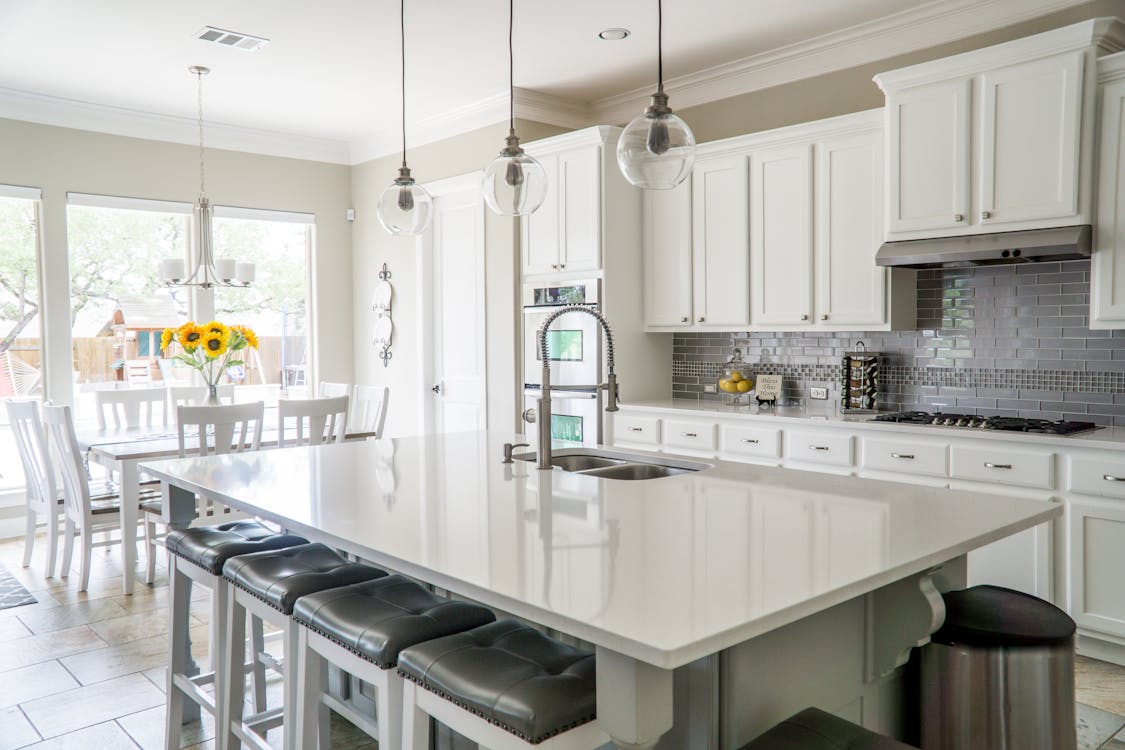
The typical mortgaged homeowner has $181,000 in untapped home equity per Redfin data. As rates come down and refinance volume jumps (Redfin expects a 30% increase in 2026), homeowners gain easier access to that equity. Some will buy new homes. Most will improve the ones they have.
Home improvement’s share of total residential construction has risen from 33% in 2007 to 44% in early 2025 per NAHB. The number of remodeling firms nearly doubled from 69,000 in 2000 to 128,000 today. The median age of US owner-occupied homes climbed to 41 years, with nearly half the housing stock built before 1980. These homes need work. The “improve, don’t move” trend isn’t going anywhere.
Home improvement customers expect more. The companies that figure that out will win.
Amazon trained everyone to expect instant updates, transparent communication, and problems solved before you have to ask. A homeowner spending $30,000 on a sunroom wants to know what’s happening with their project. They want callbacks returned. They want issues addressed before they have to follow up a second time.
I’ve watched companies with great products lose customers permanently because they couldn’t follow up. That’s not a sales problem. It’s a culture problem. In 2026, your online reviews aren’t just marketing. They’re a core business function that determines whether the next lead picks up the phone.
Reviews are the new word-of-mouth, except they scale infinitely. A PowerReviews survey found that 98% of consumers consider reviews essential when making purchase decisions. In home improvement, where the average project costs thousands of dollars, that number probably runs even higher.
The companies winning on customer experience make the whole process easy to follow, from the first call to the final walkthrough. Transparent pricing. Consistent communication. Showing up when you said you would. It sounds basic, but in this industry, basic reliability is a competitive advantage.
2026 Remodeling ROI by Project Type
Source: Zonda/JLC 2025 Cost vs. Value Report
Minor Kitchen Remodel
113%
Midrange Bathroom
80%
Universal Design Bath
61%
Major Kitchen (Midrange)
50%
Major Kitchen (Upscale)
36%
Frequently Asked Questions
What are the biggest home improvement trends in 2026?
Outdoor living spaces, energy-efficient upgrades (particularly heat pumps and high-performance windows), aging-in-place modifications, and whole-home renovations of aging housing stock top the list. Remodeling spending is projected to hit a record $524 billion in early 2026 according to Harvard’s Joint Center for Housing Studies.
How much does a kitchen remodel cost in 2026?
A minor midrange kitchen remodel averages $28,458 nationally and returns approximately 113% ROI according to the 2025 Cost vs. Value Report by Zonda. Major midrange remodels run about $82,793 with roughly 50% return. Upscale kitchen overhauls average $164,104 and return about 36%.
Are home improvement tax credits still available in 2026?
The federal Energy Efficient Home Improvement Credit (Section 25C) and Residential Clean Energy Credit (Section 25D) expired December 31, 2025. State-level rebate programs funded under the Inflation Reduction Act (HOMES and HEAR programs) remain active in some states. Check your state energy office for current availability.
Is 2026 a good year to remodel?
Market conditions support it. Mortgage rates have fallen below 6% for the first time since 2022, material costs are stabilizing with 2-3% annual increases, and the typical homeowner has $181,000 in untapped equity. NAHB forecasts residential remodeling to increase 3% in 2026 in inflation-adjusted terms.
What home improvement gives the best return on investment?
Minor kitchen remodels lead at approximately 113% ROI nationally. Midrange bathroom remodels return 74-80%. Universal design (aging-in-place) bathrooms return 61%, a figure that increased 12% year-over-year. All data from the 2025 Cost vs. Value Report published by Zonda and the Journal of Light Construction.
Nearly 30 years in and I’m still learning this industry. But the fundamentals haven’t changed. Hire right, train hard, take care of the customer, and show up. Everything else is noise.
Want the full story on my career in construction and home improvement? Or reach out directly. I’m also on LinkedIn.

About Khary Penebaker
Khary Penebaker is a Regional General Manager at Great Day Improvements, overseeing operations across Chicago, Madison, Milwaukee, and Minneapolis. He previously built Roofed Right America from startup to $35M+ in revenue with 180 employees and founded Penebaker Enterprises, growing it from $1.5M to $15M. A gun violence prevention advocate and former Everytown for Gun Safety Fellow, Khary brings two decades of leadership experience in construction, operations, and civic engagement.
Frequently Asked Questions
How big is the home improvement industry in 2026?
The US home improvement market is projected to reach $615 billion in 2026, according to the Home Improvement Research Institute. Harvard Joint Center for Housing Studies projects remodeling spending will hit a record $524 billion. The NAHB Remodeling Market Index has posted 24 straight quarters above breakeven.
What are the biggest home improvement trends in 2026?
Outdoor living spaces are the dominant category, with homeowners allocating roughly 25% of remodeling budgets to decks, patios, sunrooms, and screened porches. Energy efficiency remains strong. Aging-in-place modifications are growing as 58 million Americans are now over 65. The skilled labor shortage continues to constrain project timelines across the country.
Is it a good time to remodel in 2026?
Demand is strong and costs have stabilized compared to the rapid increases of 2022 through 2024. Material prices have leveled off. The main challenge is labor availability, with 94% of construction firms reporting difficulty filling positions. Planning ahead and booking contractors early gives you the best chance at competitive pricing and shorter timelines.
Keep Reading
Last updated: March 18, 2026


