
What Building a $35M Operation Taught Me About Leadership
TL;DR
I started Penebaker Enterprises in 2002 with a truck, a phone, and no backup plan. Grew it from $1.5 million to $15 million doing commercial roofing and sheet metal fabrication with 50 employees.
I started Penebaker Enterprises in 2002 with a truck, a phone, and no backup plan. Grew it from $1.5 million to $15 million doing commercial roofing and sheet metal fabrication with 50 employees. Then I joined Roofed Right America and helped take it from startup to over $35 million with 180 employees across multiple states. Now I run the Upper Midwest region for Great Day Improvements across four markets: Chicago, Madison, Milwaukee, and Minneapolis.
That’s the resume version. Here’s what it actually taught me.
Nobody follows a title
Gallup’s 2025 State of the Global Workplace report says 70% of the variance in team engagement comes directly from the manager (Gallup, 2025). Not the company. Not the compensation package. The manager. That tracks with everything I’ve seen on job sites and in boardrooms over two decades.
When I was running roofing crews early on, the guys didn’t care what was on my business card. They watched whether I showed up before them and stayed after them. They watched whether I did the work alongside them or just directed it from a distance. That never changed as the organization grew. The moment you start thinking your position earns you respect, you’ve already lost it.
More than half the managers responsible for that 70% of engagement are learning on the fly with no formal training. I was one of them for years. The difference between the leaders who figure it out and those who don’t? The ones who figure it out stay close enough to the work to know what their people actually need.
Hiring is where most leaders blow it
Nearly three in four employers, 74%, admit they’ve hired the wrong person for a role (SHRM). The cost isn’t just the recruiting spend. SHRM estimates replacing an employee runs between 50% and 200% of their annual salary when you factor in recruiting, onboarding, lost productivity, and the morale hit to the rest of the team.

I made plenty of those mistakes. Hired people who looked great on paper and couldn’t perform when it got hard. What I learned over time is that you can train almost any skill, but you can’t train someone to care. The people who built my best teams were hungry, honest, and coachable. That combination is rarer than it sounds.
- Hungry. They want to grow, not just collect a paycheck. You can see it in the questions they ask during the interview.
- Honest. In roofing, one dishonest crew member can cost you a $200K contract and a client relationship that took years to build.
- Coachable. Experience matters less than willingness to learn. I’ve watched guys with zero roofing background outperform 10-year veterans because they listened.
- Reliable. Show up on time. Every day. In construction, a no-show doesn’t just slow one project. It cascades across every crew schedule that week.
- Curious. The best people I’ve hired asked about GAF certifications, OSHA standards, and manufacturer warranty programs before their second interview.
That list hasn’t changed in 20 years. What has changed is how hard you have to look to find those five things in one person. The AGC reports that 94% of construction firms had trouble filling positions in 2025. Finding talent is the bottleneck now, not finding work.
Culture is what happens when you leave the room
Only 24% of employees feel psychologically safe at work, according to the 2025 Achievers Workforce Institute report. Google’s Project Aristotle studied over 180 teams and found that psychological safety, the belief that you won’t be punished for speaking up, was the single strongest predictor of team effectiveness. Not talent. Not experience. Whether people felt safe enough to be honest.
Culture is the one that takes the longest to figure out. Every company talks about it. Almost none of them actually build it on purpose. Culture is what happens in the room when you’re not in it. It’s whether your team tells you the truth before a small problem becomes an expensive one, or waits until there’s no choice.
At every company I’ve built or run, the high-performing teams had one thing in common: people weren’t afraid to say “I don’t know” or “I messed up.” That doesn’t happen by accident. It happens because the leader makes it safe to be honest, every single day, not just when things are going well.
Here’s the disconnect: 89% of managers say their employees are thriving, but the actual number is 24% (Gallup, 2025). That three-to-one gap is where culture breaks down. If you think your team is fine and they’re not telling you otherwise, that’s not a culture problem. That’s a trust problem.
Growth breaks everything you built
The systems that got us to $10 million didn’t work at $20 million. The team that got us to $25 million needed different support at $35 million. That’s not a warning, it’s just how it works. The leaders who struggle with scale are the ones trying to hold onto what used to work. You have to be willing to rebuild while you’re still running.
In my current role, I inherited a region with problems. Falsified records. Staff resignations. Quality issues across four markets. The playbook from my last company didn’t transfer one-to-one. What transferred was the principle: diagnose before you prescribe, and take care of the people while you fix the systems.
Here’s what I learned scaling from a small crew to 180 people across multiple states. The leadership job changes completely at each stage, and what got you to $5M will actively hold you back at $15M.
| Stage | Revenue | Team Size | Leader’s Primary Job |
|---|---|---|---|
| Startup | $0 – $5M | 1 – 20 | Do everything. Sell, estimate, manage crews, answer phones. You are the business. |
| Growth | $5M – $15M | 20 – 50 | Hire your first real managers. Stop doing and start teaching. Hardest transition. |
| Scale | $15M – $35M | 50 – 120 | Build systems that work without you. Codify standards, SOPs, and training programs. |
| Enterprise | $35M+ | 120+ | Protect the culture. Hire leaders who hire leaders. Your job is strategy and people. |
Your story shapes your leadership whether you talk about it or not
The thing I didn’t expect is how much my personal story shaped the kind of leader I became. My mother Joyce died by suicide with a gun when I was 20 months old. I grew up without her and spent a long time not talking about it.
When I finally started to, publicly, running for Congress, doing advocacy work, speaking at the DNC, something shifted on my teams too. People saw that I could be honest about something painful and still show up and lead. That gave them permission to bring their full selves to work.
The best thing that came out of sharing my story wasn’t the advocacy impact. It was that my teams trusted me more because they knew I wasn’t hiding anything. In a field where psychological safety affects everything from retention to revenue, that kind of honesty changes how people show up.
At Roofed Right America, we had crews working across multiple states. I couldn’t be on every roof. So trust wasn’t optional. It was how we operated. When a foreman in Indiana called to say weather was going to delay a job by two days, I didn’t second-guess him. He’d earned that over dozens of projects. When I gave a project manager authority to approve change orders up to $10K without calling me, productivity jumped. People perform better when they know you trust their judgment. The Harvard Business Review research backs this up: high-trust companies see 50% higher productivity and 76% more engagement than low-trust ones.
The real lesson after 20 years
The real lesson from building and running operations over two decades is simple: the numbers follow the people. Every revenue milestone I ever hit was because someone on my team decided to show up and give their best. My job was to build an environment where that was possible and then get out of the way.
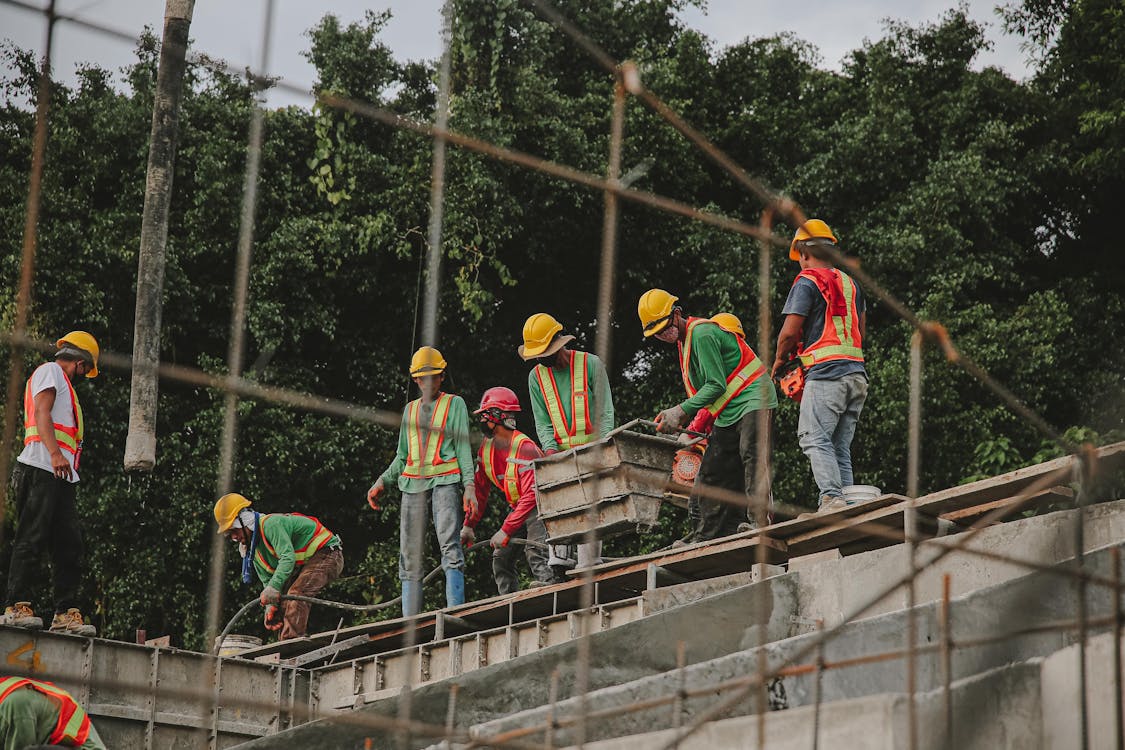
If you’re building a team right now, take care of the people first.
Read more about my advocacy work, my background, or explore the blog for more on leadership, career, and the issues that matter.
Frequently Asked Questions
How much does a bad hire really cost?
SHRM puts it at 50% to 200% of the person’s annual salary, depending on seniority. For a $60,000 manager, that’s up to $120,000 when you add up recruiting, onboarding, lost productivity, and morale damage. 74% of employers say they’ve made at least one bad hire.
What is psychological safety and why does it matter for team performance?
It’s the belief that you won’t be punished for speaking up, admitting mistakes, or asking questions. Google’s Project Aristotle studied 180+ teams and found it was the strongest predictor of team effectiveness. Only 24% of employees say they feel psychologically safe at work right now (2025 Achievers Workforce Institute).
How much does the manager affect employee engagement?
70% of the variance in team engagement comes from the manager, per Gallup’s 2025 research. Most of those managers have no formal training. U.S. employee engagement hit an 11-year low in early 2025, and disengaged employees cost the economy about $2 trillion a year in lost productivity.
What’s the biggest leadership challenge in construction right now?
Finding people. The AGC says 94% of construction firms had trouble filling positions in 2025. NCCER estimates 41% of the current workforce will retire by 2031. Retention and leadership development aren’t optional anymore if you want to grow.
How do you scale company culture as the team grows?
It doesn’t happen on its own. The norms that work at $10 million in revenue usually break at $20 million. You need consistent behavior from leaders, you need to hire for character over credentials, and you need to make honesty safe. High-trust organizations outperform on both productivity and retention, and that gap widens as you get bigger.


