
Why I Still Fight: My Story of Gun Violence Prevention
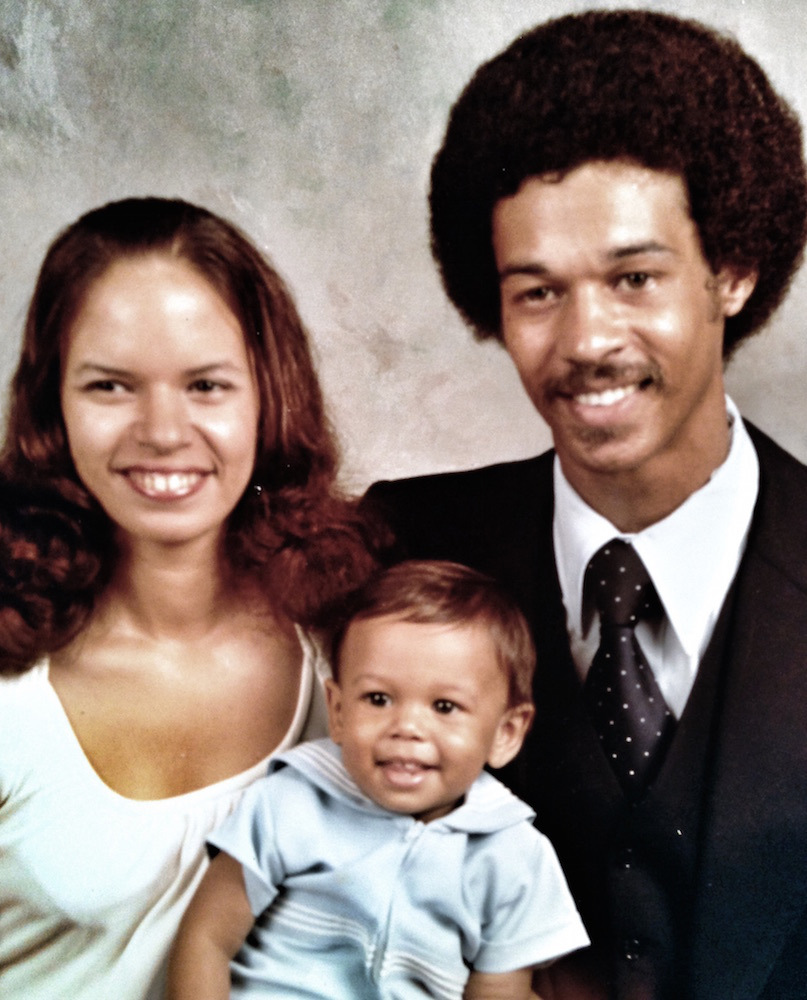
My mother Joyce died by suicide with a gun when I was 20 months old. I don’t remember her voice. I don’t remember her face. I never will.
I’ve spent nearly 50 years figuring out what to do with that. Not processing it. Not healing from it. Figuring out what to do with it. And what I landed on is this: the only way that kind of loss stays bearable is if it means something beyond my own grief. That’s what pulled me into gun violence prevention. Not a career plan. Not a platform. Just the thing I couldn’t walk away from.
Growing up without a mother
Here’s a thing nobody tells you about losing a parent before you can remember them: the grief doesn’t start with the loss. It starts the first time you realize what’s missing. For me, that happened in middle school.
I’d sit in the cafeteria and watch my friends’ moms show up for lunch. Or I’d hear someone complain about their mom nagging them about homework, and I’d think: I would give anything for that. Not the milestone moments, the graduations and weddings people always talk about. The ordinary ones. The ones so small that the people who have them don’t even notice.
That absence shaped everything. How I parent. How I lead. How I process risk. When you grow up knowing that a single moment, a single decision, a single unlocked drawer can erase a person from your child’s life forever, you don’t think about gun violence as a political issue. You think about it as the thing that already happened to you.
Why a business executive cares about gun violence
According to provisional CDC data reported by The Trace (2025), more than 44,000 Americans died from gunshot wounds in 2024, with 62% of those deaths being suicides. People sometimes ask why a regional general manager in the home improvement industry cares this much about those numbers. Fair question.
I built Penebaker Enterprises from a $1.5 million commercial roofing operation to $15 million in revenue with 50 employees. After that, I helped grow Roofed Right America to over $35 million with 180 people. I know how to read a P&L, build a team, run a region. Right now I manage four markets across the Upper Midwest for Great Day Improvements. None of that insulates me from this issue. It actually makes me more impatient with it.
Business teaches you to look at problems with data, not emotion. So when I look at gun violence, I don’t see a culture war. I see a problem with measurable causes, proven interventions, and a failure to implement what we already know works. The same person who builds operational systems for a living is the same person who lost his mother to a bullet before he could form a single memory of her. You don’t get to separate those two things.
What the numbers actually say
In 2024, 62% of all gun deaths in America were suicides, nearly 27,600 people, according to provisional CDC data reported by The Trace. Gun suicides have risen for six straight years. Firearms were used in more than half of all suicides in 2024, the highest share in at least 25 years. That’s not a footnote in a policy report. That’s the majority of the crisis.
Most people picture a mass shooting when they hear “gun violence.” Something on the news with a body count big enough to break through the cycle. But the quiet deaths outnumber the loud ones every single year. My mother is in that number. So are tens of thousands of other people who died in rooms where nobody was watching.
.chart-title { font-family: ‘Source Sans 3’, Helvetica Neue, sans-serif; font-size: 15px; fill: #0B0E1A; font-weight: 700; }
.chart-label { font-family: sans-serif; font-size: 13px; fill: #1A1F35; }
.chart-value { font-family: monospace; font-size: 22px; fill: #0B0E1A; font-weight: 700; }
.chart-source { font-family: sans-serif; font-size: 10px; fill: #8A8A8A; }
.chart-center { font-family: sans-serif; font-size: 12px; fill: #1A1F35; }
.chart-center-num { font-family: monospace; font-size: 20px; fill: #0B0E1A; font-weight: 700; }
U.S. Firearm Deaths by Intent, 2024
44,446
total deaths
Suicide
62%
Homicide
35%
Other
3%
Gun suicides rose for
6 straight years
Source: CDC provisional data via The Trace, 2025
Gun violence in Wisconsin
In 2024, an estimated 735 people died from gun-related injuries in Wisconsin, and 69% of those were suicides (USAFacts, 2024). Not homicides. Not accidents. People who turned a gun on themselves. Wisconsin also holds the worst gun homicide disparity between Black and white residents of any state in the country (VPC/WAVE, 2024). This crisis doesn’t stay in one lane.
Since 2020, firearm deaths have outpaced motor vehicle deaths in Wisconsin (Johns Hopkins CGVS). And as of that same year, guns became the leading cause of death for children in this state. Read that again. The leading cause of death for kids.
Between 2018 and 2022, the firearm suicide rate among Black Wisconsin residents more than tripled, from 3.0 to 9.4 per 100,000 (VPC/WAVE, 2024). The communities being hit hardest are the ones with the fewest resources to respond. Does that sound like a problem that belongs to someone else?
What actually works
Yes. And the evidence isn’t thin. A 2025 umbrella review in Acta Psychiatrica Scandinavica examined international research and found that means restriction, temporarily removing access to firearms during a crisis, is one of the most proven strategies for preventing suicide (Nevarez-Flores et al., 2025). When someone in crisis can’t immediately reach a gun, the data shows most don’t substitute another method. They survive.
How effective? 85-90% of suicide attempts with a firearm are fatal (Everytown Research). With other methods, nine out of ten people survive and most never attempt again. The crisis passes. The person lives. But only if the gun isn’t there in that moment.
Extreme Risk Protection Orders (ERPOs), sometimes called red flag laws, let families and law enforcement petition a court to temporarily remove firearms from someone in crisis. Twenty-one states plus DC now have these laws. A 2024 study across four states found that for every 13 orders involving someone with documented suicide risk, an estimated one suicide was prevented (Swanson et al., 2024). When Connecticut paired its ERPO with public education, the state saw a 13.7% reduction in gun suicides (Everytown). In 2024, Michigan and Minnesota both implemented ERPOs for the first time, filing 391 and 137 petitions respectively in their first year (Barnard et al., 2025).
This isn’t about taking guns away permanently. It’s about creating a pause between a person in crisis and a permanent decision.
| State | Enacted | Petitions (Annual Est.) | Key Finding |
|---|---|---|---|
| Connecticut | 1999 | 200+ | 1 suicide prevented per 13 orders for at-risk respondents (Swanson et al., 2024) |
| Indiana | 2005 | 300+ | 7.5% reduction in firearm suicides over 10 years (Kivisto & Phalen, 2018) |
| Michigan | 2024 | 391 (first year) | Bipartisan passage after Oxford High School shooting advocacy |
| Minnesota | 2024 | 137 (first year) | Part of comprehensive gun safety package signed by Gov. Walz |
A failed congressional race changed everything
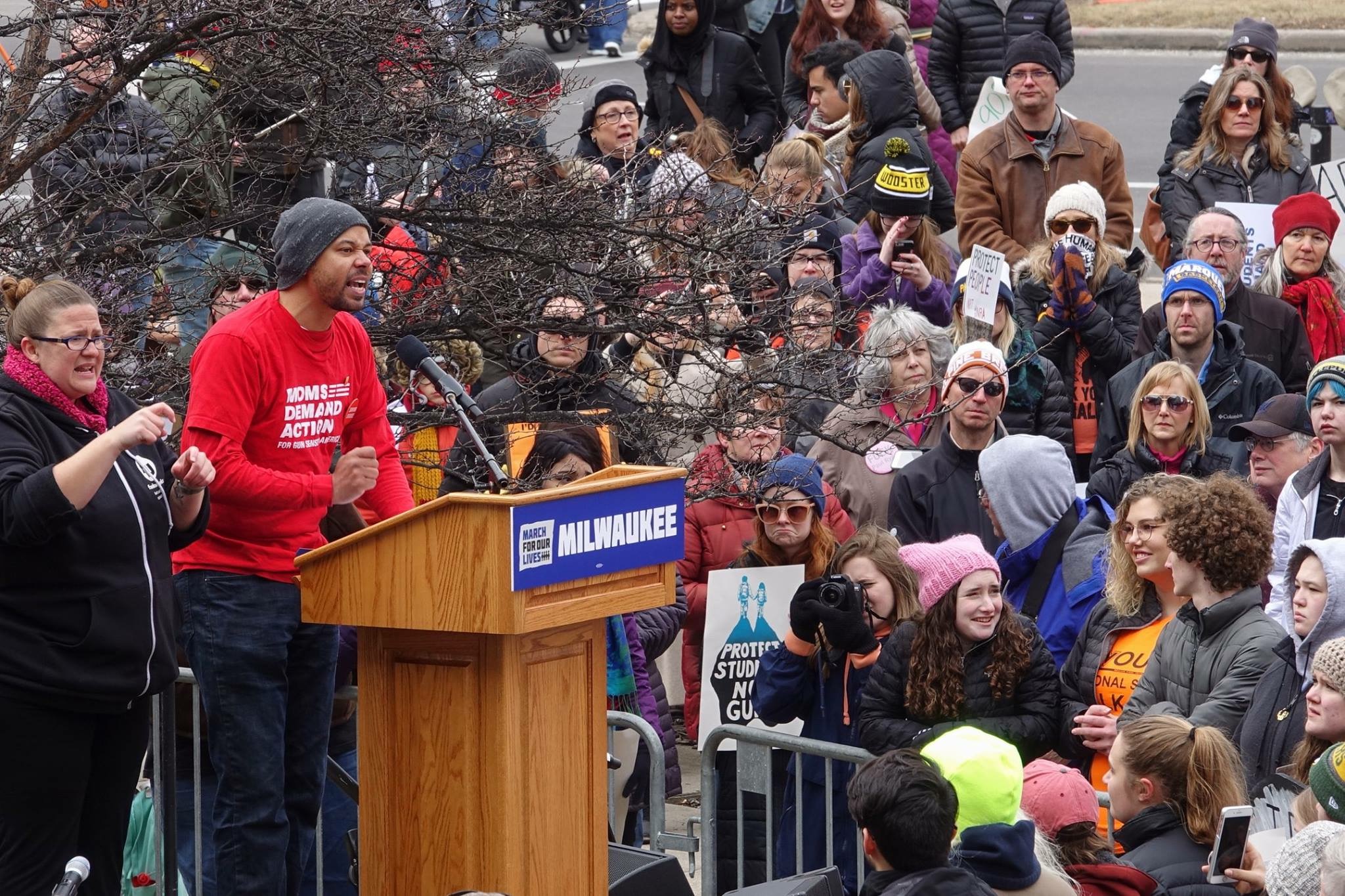
In 2016, I ran for Congress in Wisconsin’s 5th Congressional District. I lost. But something happened during that campaign that I didn’t expect: I was asked to speak at the Democratic National Convention. Standing on that stage, telling my mother’s story to a national audience, something shifted. It wasn’t the applause or the cameras. It was hearing my own voice say the words out loud, in front of millions of people, and realizing I couldn’t take them back. I didn’t want to.
After that, I served as a DNC representative for Wisconsin from 2017 to 2023. I became an Everytown for Gun Safety Wisconsin Fellow because I didn’t want to just talk about this. I wanted to learn the policy cold, understand the research, and sit in the rooms where legislation gets written. I served as Board President of Planned Parenthood of Wisconsin’s C4 from 2021 to 2024 because public health issues don’t exist in silos, and the same communities affected by gun violence are often the ones fighting for access to healthcare.
I bring the same approach to advocacy that I bring to running a business. Data matters. Relationships matter. Showing up consistently matters more than showing up loudly once. You don’t move policy by making noise. You move it by building trust with the people who can act, and staying in the fight long enough for the window to open.
Why keep going when progress is this slow
The Bipartisan Safer Communities Act of 2022 allocated $750 million in part to support state implementation of ERPOs (The Trace, 2025). The 2024 CDC data shows overall gun deaths dropped 5% from 2023, driven mainly by a 14% decline in homicides. That didn’t happen by accident. It happened because people refused to leave the room. But gun suicide keeps climbing. That’s where the work isn’t done.
I’m not going to pretend this is easy. There are moments I’ve wanted to pull back. Days where the weight of it, the slow grind, the political headwinds, the losses that keep coming while you’re waiting for the next small win, makes it tempting to go quiet. To focus on work and family and let someone else carry this.
But I have three kids: Josie, Kyan, and Sydney. Every time I think about stepping back, I think about what it would mean for them to look back someday and know their father had a platform, had a story that was directly connected to this crisis, and decided it was easier to stay quiet. That’s not who I am. And it’s not what Joyce deserved.
What you can do right now
If you’ve read this far, you already care. That’s not nothing. Here’s where to turn that into something concrete:
- Talk to your elected officials. Find yours at usa.gov/elected-officials. Tell them firearm suicide prevention matters. Be specific. Mention ERPOs by name.
- Support the organizations doing the work. Everytown for Gun Safety, Brady United, and Moms Demand Action are all places your time or money goes directly to policy change.
- Learn about ERPOs in your state. If your state has an extreme risk protection order law, know how it works. If it doesn’t, push for one.
- If you own firearms, store them safely. Locked, unloaded, ammunition stored separately. The evidence is clear: this saves lives, especially during a crisis moment (Johns Hopkins, 2025).
- Tell your story. If gun violence has touched your family, consider saying so. The more people willing to say “this happened to us,” the harder it becomes to treat this as an abstraction.
I’m still in this fight because it was never really a choice. It’s the thing I do with the life I was given.
If you or someone you know is struggling:
Call or text 988 (Suicide & Crisis Lifeline), available 24/7. You can also chat at 988lifeline.org.
Frequently Asked Questions
What percentage of gun deaths in the U.S. are suicides?
In 2024, 62% of all firearm deaths were suicides, about 27,600 people, per provisional CDC data. Gun suicides have risen for six straight years, and firearms were used in more than half of all suicides nationally, the highest share in at least 25 years (The Trace, 2025).
Do red flag laws (ERPOs) actually reduce gun suicides?
Yes. A 2024 study across four states found that for every 13 ERPO orders involving someone at documented risk, one suicide was prevented (Swanson et al., 2024). Connecticut saw a 13.7% drop in gun suicides after pairing its ERPO with public education. Twenty-one states plus DC have these laws now, and since the Parkland shooting, 97% of the 67,000+ ERPOs filed in U.S. history have been granted (Everytown Research).
What is means restriction and why does it work for suicide prevention?
Means restriction is temporarily removing access to lethal methods during a crisis. It works because suicidal crises tend to be brief and impulsive. 85-90% of firearm attempts are fatal, but nine out of ten people who survive a non-firearm attempt never go on to die by suicide. A 2025 umbrella review confirmed it as one of the best-supported suicide prevention strategies available (Nevarez-Flores et al., 2025).
How does safe firearm storage prevent suicide?
Having a firearm in the home triples the risk of death by suicide, per Harvard’s T.H. Chan School of Public Health. Best practice: store firearms unloaded, locked, with ammunition separate. A 2025 Johns Hopkins study found that removing guns from the home during a crisis is the single most effective intervention, and Child Access Prevention laws are linked to lower youth firearm suicide rates (Johns Hopkins, 2025).
What are the gun violence statistics for Wisconsin?
In 2024, about 735 people died from gun injuries in Wisconsin. 69% were suicides. Since 2020, gun deaths have outpaced car deaths in the state, and firearms are now the leading cause of death for Wisconsin children. Wisconsin also has the worst gun homicide disparity between Black and white residents of any state. Between 2018 and 2022, the firearm suicide rate among Black Wisconsinites tripled (USAFacts; VPC/WAVE).

